We get asked some version of "is Amaravati actually being built, or is this still on paper?" often enough that it's worth laying out the timeline honestly — including the slow years, not just the highlight reel.
2014: A New State, A New Capital
Following the bifurcation of Andhra Pradesh and the creation of Telangana, AP needed an entirely new capital. A greenfield site on the southern bank of the Krishna river, spanning 29 villages, was selected and the Capital Region Development Authority (CRDA) was set up to plan it.
2015: The Foundation Stone
In October 2015, the foundation stone for Amaravati was formally laid in a ceremony attended by national and state leaders — a symbolic and widely covered start to construction. It's a genuinely significant date in the city's history, even though, as with most capital-city projects of this scale, the years that followed didn't move in a straight line.
2016–2019: Seed Capital Takes Shape
The earliest, fastest-moving phase focused on a "seed capital" area: wide access roads with full street lighting, early government housing clusters, and the Dhyana Buddha statue precinct on the riverfront. Much of this seed-capital infrastructure is the same infrastructure you can see and walk through today.
2019–2024: A Slower, More Cautious Period
Following a change in state government in 2019, Amaravati's development entered a multi-year period of policy review, with construction on several large government buildings slowing considerably while the new administration reconsidered aspects of the capital plan. This phase tested the patience of early investors and is, fairly, the period critics point to when they call Amaravati's progress "stalled." We don't think it's useful to pretend this phase didn't happen — it did, and it's part of why due diligence on holding periods matters so much for this market.
2024–2026: Construction Resumes, Operations Begin
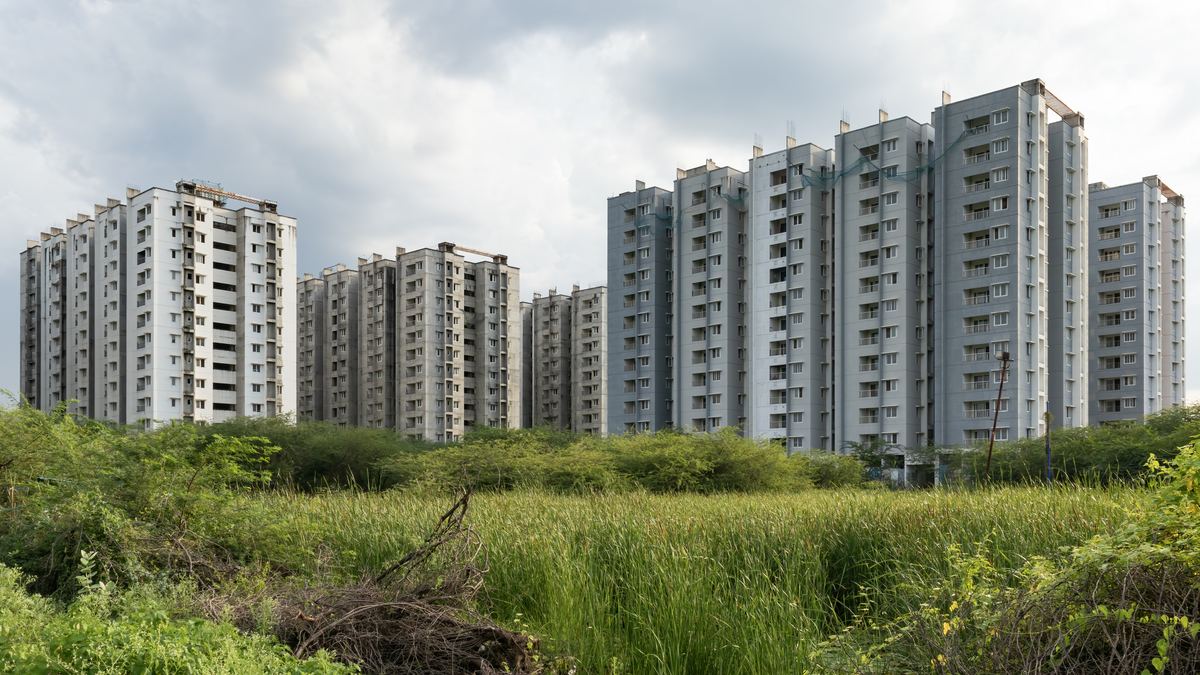
With a change in state government in 2024, work on core capital infrastructure resumed at pace. The High Court of Andhra Pradesh became operational in Amaravati, the Secretariat is functioning, and SRM University AP's campus has been running full academic sessions. Government employee housing — including Group-D housing towers and MLC quarters — is visibly under construction across multiple sites, with several clusters at advanced stages.
Today: A Working Capital, Still Under Construction
That's the honest, two-part description of Amaravati right now: it is a working capital city — government, judiciary and education functions are live — and it is still very much a construction site in large parts, with housing towers, roads and civic infrastructure actively being built out around the operational core. For buyers, this is arguably the most interesting point in the timeline: the core-function risk (will the capital actually function?) has been substantially answered, while the surrounding land market hasn't yet fully re-rated to reflect that.
What We Watch Going Forward
We track three things closely on behalf of clients: pace of remaining government housing construction (it signals near-term rental and resale demand), progress on the Finance, Electronics and Sport theme cities (the next demand drivers after the government core), and metro/highway connectivity announcements linking Amaravati to Vijayawada and Guntur. We cover the theme-city framework in more detail in Amaravati's Nine Theme Cities Explained.
A decade is a long time to wait for a capital city. It's also exactly how long most capital cities — Brasília, Canberra, Naypyidaw — have taken to go from foundation stone to functioning seat of government. Amaravati is roughly on that same clock, and it has now passed the point where "will it actually happen" is still a serious question.
Ready to explore Amaravati real estate?
Talk to our team for a free, no-obligation consultation on plots, villas and land in Amaravati.